Educating Bartenders Worldwide.
By Beverage Trade Network
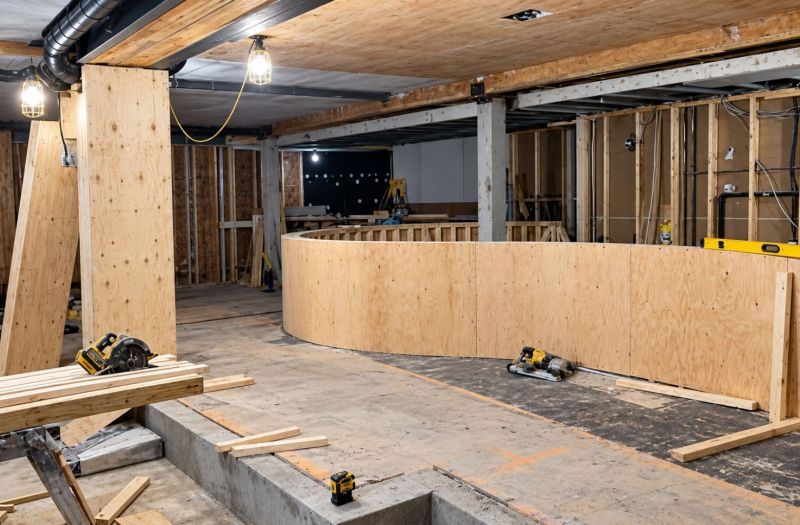
Opening a bar can look deceptively simple from the customer’s side: find a space, design an attractive room, stock it with drinks, and open the doors. In reality, a bar is a tightly connected combination of hospitality, property, licensing, construction, finance, purchasing, people management, marketing and daily operational control.
For a first-time owner, the biggest risk is not a lack of enthusiasm. It is making expensive decisions in the wrong order. Signing a lease before confirming that the premises can obtain the required alcohol licence, approving a design before creating an operational plan, or building a menu before calculating its margins can turn a promising idea into a costly problem.
This guide explains how to take a bar from an initial idea to a controlled opening—and how to manage the crucial first 90 days.
Important: This is a national U.S. business guide, not legal, tax, or licensing advice. Alcohol, zoning, employment, food-safety, accessibility, fire-safety, insurance, and operating rules vary significantly by state, county, and city. Some cities add their own approvals on top of state requirements. Confirm the rules for the exact street address with the relevant authorities and qualified advisers before signing a lease or committing construction capital.
A U.S. bar does not receive one universal “business licence.” Its right to operate is assembled from multiple registrations, licences, permits and approvals issued at different levels of government.
Federal: The IRS issues the Employer Identification Number, while federal employment, tax, accessibility and workplace-safety rules may apply. A normal bar buying beverage alcohol for resale generally works through its state and local retail licensing system; businesses that import, produce, wholesale, rectify or otherwise conduct federally regulated alcohol activities may also need Alcohol and Tobacco Tax and Trade Bureau approval.
Federal vs. State Authority Federal Level: Agencies like the Alcohol and Tobacco Tax and Trade Bureau (TTB) handle taxation, product labeling, and safety formulas, while the FTC monitors alcohol advertising. State and Local Level: Individual Alcoholic Beverage Control (ABC) boards set operating hours, server training requirements, and rules for promotions like happy hours.
State: The Secretary of State or similar office handles the entity; the revenue or taxation department handles applicable state tax accounts; the state alcohol regulator—often called the ABC, ABCC, LCB, or liquor authority—controls alcohol licensing and trade-practice rules; and state labour, unemployment, and workers’ compensation requirements apply.
County and city: Local agencies commonly control zoning, conditional-use approval, building permits, food-service permits, fire inspection, occupancy, signage, outdoor seating, entertainment, noise, local business licensing, and sometimes alcohol approval.
The sequence matters. A city may allow a restaurant use at a property but restrict a bar, nightclub, live entertainment, dancing, outdoor alcohol service, or late closing. A state alcohol authority may then require local approval before acting on the liquor application. Treat the address, operating model, and licence type as one connected decision.
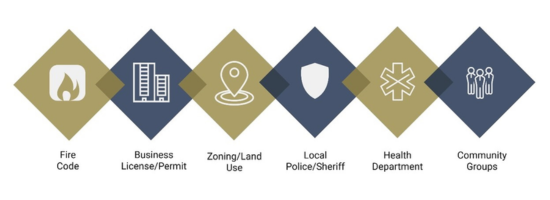
Source: National Alcohol Beverage Control Association
Refer to the National Alcohol Beverage Control Association for the Structure of U.S. Alcohol Regulation.
Do not begin with the name, logo, or interior design. Begin with the customer, the occasion, and the commercial proposition.
A clear concept answers five questions:
1. Who is the primary customer? Office workers, neighbourhood residents, tourists, students, cocktail enthusiasts, sports fans, hotel guests, or late-night customers?
2. Why will they visit? After-work drinks, dates, celebrations, live entertainment, watching sports, discovering cocktails, eating dinner, or having a convenient local drink?
3. What will you be known for? Cocktails, wine, whisky, beer, music, design, service, value, a view, a cultural theme, or a particular community?
4. How much will an average guest spend? Your concept, neighbourhood, and service style must support the same price level.
5. Why will guests choose you instead of an existing competitor? “A high-quality bar with good service” is not enough. That is the minimum expectation, not a point of difference.
Write a one-page concept statement covering the target guest, occasion, menu, atmosphere, service style, price positioning, opening hours, and point of difference. A useful positioning sentence is:
“We are creating a [type of bar] for [target customer] who wants [occasion or need], differentiated by [specific advantage], at an average spend of [amount] per guest.”
Keep the concept focused. A venue trying to be a cocktail bar, sports bar, nightclub, family restaurant, and live-music venue at the same time will create conflicts in layout, staffing, menu, sound, security, and marketing.
Neighborhood Bar: A casual, local spot focused on regular customers, comfort, and standard drinks.
Sports Bar: A high-energy venue built around multiple TVs, large seating groups, and draft beer.
Cocktail Lounge / Speakeasy: An intimate, upscale space focused on custom craft drinks, mood lighting, and ambiance.
Wine or Beer Bar: A niche concept specializing in curated selections, lower labor costs, and high-margin product offerings.
Nightclub: A high-volume enterprise featuring a dance floor, a DJ booth, and fast speed-service bars.
Learn more about developing your bar concept: Read The Blueprint for a Cocktail Bar That Stands Out for more ideas on concept development, location, design, staffing, and creating a differentiated customer experience.
If you have never worked in hospitality, spend time inside the operation before becoming responsible for one. Work or shadow several shifts if possible. Observe opening procedures, preparation, ordering, deliveries, stock counts, service peaks, intoxicated-customer management, cash controls and closing duties.
Speak with experienced bar owners, general managers, bartenders, chefs, beverage directors, alcohol-licensing specialists, commercial property advisers and hospitality accountants. Each sees a different part of the risk.
At minimum, recruit an experienced operating adviser or general manager early. Do not wait until construction is nearly complete. An operator should influence the site, layout, equipment, storage, menu, labour model and opening plan. A beautiful bar designed without operational input can create years of unnecessary labour and slow service.
Map the proposed trading area rather than relying on a general impression of the city. Study the neighbourhood at different times and on different days.
Record:
- Foot traffic by hour and day
- Residential and office density
- Local income and spending patterns
- Hotels, theatres, stadiums, transport hubs and event venues
- Nearby bars, restaurants, clubs and alcohol retailers
- Competitors’ prices, menus, opening hours and busy periods
- Parking, public transport, taxis and ride-share access
- Planned developments and neighbourhood changes
- Noise sensitivity and proximity to residential buildings
Visit at least 10 relevant competitors. Note what they do well, where demand appears unmet, how long guests stay, what they order, and whether the venue is busy because of its concept, location, pricing, promotions, or an established reputation.
Test the concept before taking a permanent site. A pop-up, ticketed tasting, guest shift, collaboration, temporary residency, or series of small events can reveal whether customers will actually pay for the experience. Collect email addresses, measure attendance, record average spend, and ask guests what would bring them back.
Turn the concept into operating assumptions. Estimate:
- Number of seats and standing capacity
- Trading days and hours
- Expected covers or guest visits by daypart
- Average spend per guest
- Beverage and food sales mix
- Cost of goods sold
- Staffing by shift
- Rent and occupancy costs
- Card-processing fees
- Utilities, insurance, software, licences and professional fees
- Entertainment, security, cleaning and waste costs
- Marketing expenditure
- Repairs, replacements and administrative costs
Build monthly projections for at least the first 24 months. Use three versions: conservative, base and strong. New owners often plan around the strong case and finance only the base case. Reverse that approach: confirm that the business can survive a slow opening, construction delay, or weak season.
Monthly sales
= Number of trading days × Average guests per day × Average spend per guest
Gross profit
= Net sales − Cost of products sold
Contribution margin
= Net sales − Variable costs
Break-even sales
= Monthly fixed costs ÷ Contribution-margin percentage
Sales per labour hour
= Net sales ÷ Total labour hours
Do not apply one generic margin to the entire menu. Draught beer, bottled beer, wine by the glass, premium spirits, cocktails, soft drinks and food have different product costs, preparation times, wastage and selling patterns.
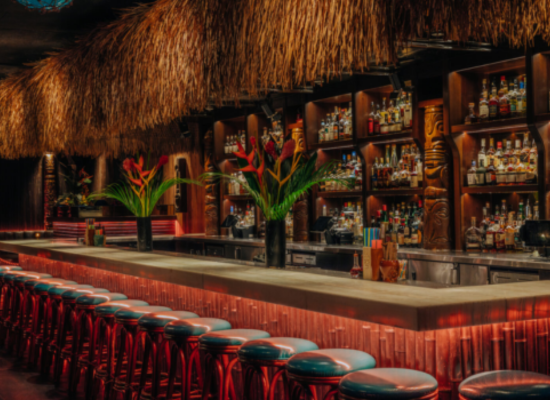
Learn more on designing an efficient and profitable bar: Behind the Vibe: How Three Dots and a Dash Balances Immersion, Efficiency and Profitability explains how thoughtful design, preparation and team training can support both creativity and commercial performance.
Create a “uses of funds” schedule before looking for capital. Include:
- Lease deposit, advance rent and legal costs
- Property acquisition or key money, if applicable
- Licensing, permits and professional fees
- Architect, designer, engineers and consultants
- Construction and contractor costs
- Bar, kitchen, refrigeration and cellar equipment
- Furniture, lighting, sound and signage
- Glassware, tools, smallwares and uniforms
- Point-of-sale, reservations, scheduling and accounting systems
- Opening beverage and food inventory
- Recruitment and pre-opening payroll
- Training and trial services
- Photography, website, launch marketing and public relations
- Insurance and utility deposits
- Contingency allowance
- Working capital after opening
The contingency is not optional. Hidden building conditions, delayed permits, equipment changes, and utility upgrades are common. Working capital is equally important. A venue can open successfully and still fail because it runs out of cash before sales become consistent.
Separate one-time opening costs from recurring monthly expenses. Also distinguish between essential opening items and upgrades that can wait. This gives you options if the build begins to exceed the budget.
Funding may come from the founder, partners, outside investors, bank lending, equipment finance, landlord contributions or a combination of sources.
Before accepting money, document:
- Who owns what percentage
- Who contributes cash, property, guarantees, or operating work
- Who controls major decisions
- Whether founders receive salaries
- How future capital calls will work
- How profits will be distributed
- What happens if more money is required
- What happens if a partner wants to leave
- Whether investors have approval, voting, or information rights
- How the business will be valued in a sale or buyout
Use a lawyer and accountant familiar with hospitality businesses. Informal agreements between friends can become destructive when construction is delayed, or more capital is needed.
If using bank finance, investigate conventional commercial loans, equipment finance, and relevant U.S. Small Business Administration-backed lending options. An SBA guarantee does not turn a weak proposal into a financeable one: lenders will still examine the owners, equity contribution, projections, lease, collateral, management experience, and repayment ability. A non-industry founder should strengthen the application with credible operating leadership and conservative assumptions.
Before taking binding contracts, work with a U.S. attorney and CPA to choose the entity and tax treatment. Many independent venues use a limited liability company, but an LLC is not automatically the right answer for every ownership, investment, or tax situation. The structure affects personal liability, capital raising, governance, payroll, and taxation.
A typical setup process includes:
1. Check name availability with the state and conduct a basic federal trademark search.
2. Form the LLC or corporation with the relevant state office.
3. Appoint a registered agent as required.
4. Sign an operating agreement, shareholders’ agreement, or partnership agreement.
5. Obtain an EIN directly from the IRS.
6. Register any DBA or assumed name used by the bar.
7. Open a dedicated business bank account and accounting system.
8. Register for state and local sales, meals, excise, or hospitality taxes where applicable.
9. Establish payroll tax, unemployment insurance, and workers’ compensation accounts before employing staff.
10. Confirm current federal and state ownership-reporting obligations with counsel; these rules have changed and should not be handled from an old checklist.
Never mix personal and business funds. Keep signed formation documents, investor records, licences, leases, insurance policies and tax registrations in a controlled document folder.
The exact team depends on the project, but a first-time founder may need:
- A hospitality-focused lawyer
- An alcohol-licensing attorney or specialist familiar with the specific state and municipality
- A commercial property broker
- An accountant or financial adviser
- An architect and relevant engineers
- An interior designer with hospitality experience
- A general contractor
- A kitchen or bar-equipment specialist
- An experienced bar operator or opening consultant
- An insurance broker
- A technology and security provider
Confirm responsibilities in writing. Identify who owns the master timeline, who submits each permit, who controls design changes and who approves additional expenditure. Many opening delays come from gaps between advisers rather than from the work itself.
List every approval the concept may require. Depending on the jurisdiction and format, this may include:
- Business registration and tax registrations
- State and, where required, local retail alcohol licence
- Alcohol-server, manager, or responsible-beverage-service certifications required by state or local law
- Planning or zoning approval
- Change-of-use permission
- Building permits
- Fire inspection and occupancy approval
- Health and food-service permits
- Signage permission
- Outdoor seating or pavement permits
- Entertainment, live-music or dancing permissions
- Late-hours approval
- Music-performance licences
- Compliance with the Americans with Disabilities Act and applicable state or local accessibility codes
- Waste, grease, pest-control and environmental requirements
- Security plans or door-staff licensing
Investigate the alcohol licence carefully. U.S. licence names and privileges vary widely. Depending on the jurisdiction, you may encounter beer-and-wine licences, full on-premise liquor licences, restaurant licences, tavern licences, club licences, hotel licences and entertainment-related approvals. Ask:
- Does the licence permit beer, wine and distilled spirits, or only some categories?
- Are on-premise and off-premise sales treated separately?
- Is the licence issued directly, transferred from an existing operator, or purchased in a limited secondary market?
- Is the number of licences capped by population or district?
- Must a certain percentage of revenue come from food?
- Are minimum kitchen, seating, or meal-service requirements imposed?
- Are Sunday sales, happy hours, delivery, takeout drinks, tastings, private events, or outdoor service restricted?
- What closing hours apply, and can the locality impose earlier hours?
- Are owners, investors, and managers subject to disclosure, residency, or background checks?
- Must public notice be posted or nearby residents be notified?
- Can a neighbourhood association, police department or other party object?
- Is responsible-beverage-service training mandatory?
- What changes in ownership, financing, layout or management require prior approval?
Do not assume you can simply “buy” someone else’s liquor licence. Transfers require regulatory approval, and a licence may not be portable to another address. In control states, purchasing rules may also differ from those in open states.
Most U.S. bars buy alcohol through state-authorized wholesalers or, where state law permits, other authorized channels. The three-tier system and tied-house rules can restrict who may sell to you, what credit is allowed, what gifts or equipment suppliers may provide and how brands may support promotions. Have counsel or the state regulator explain the rules before accepting supplier money, equipment, exclusive arrangements or unusually generous incentives.
Never assume that because a property previously operated as a bar, the same licence, capacity, hours or entertainment permissions will automatically transfer to you.
The cheapest rent does not necessarily produce the lowest operating cost. A poorly located or technically unsuitable property can require more marketing, labour and construction while generating less revenue.
Assess each site against a written scorecard:
- Visibility and street presence
- Target-customer traffic
- Access and transportation
- Safe arrival and departure
- Permitted use and licensing prospects
- Legal capacity
- Rent, service charges, taxes and other occupancy costs
- Floor plan and customer flow
- Bar length and service stations
- Storage, cellar and delivery access
- Kitchen and extraction capability
- Electrical supply, water, drainage, gas and HVAC
- Restrooms and accessibility
- Sound transmission and neighbour risk
- Emergency exits and fire requirements
- Signage and outdoor space
- Structural condition and hidden repair risk
Before signing, have the lease, building systems, permitted use, and licensing pathway reviewed by qualified professionals. Where possible, make the commitment conditional on licensing, planning, finance, and physical due diligence.
Ask the city or county for a written zoning verification or equivalent determination. Check the certificate of occupancy and legal occupant load rather than relying on the broker’s marketing. Confirm whether the proposed operation is classified as a restaurant, bar, tavern, nightclub, assembly use, or another category—and whether adding DJs, dancing, live music, a patio, or later hours changes that classification.
The headline rent is only one part of a lease. Review the full occupancy obligation, including service charges, property taxes, insurance, maintenance, repair responsibility, common-area costs, and annual increases.
Negotiate points such as:
- Rent-free construction period
- Landlord contribution to improvements
- Permission for the intended use, hours, signage and entertainment
- Conditions if licences or planning approvals are refused
- A liquor licence and permit contingency, with enough time to complete the real approval process
- Responsibility for structural work and utility upgrades
- Rights to install extraction, refrigeration, soundproofing and external equipment
- Exclusivity against competing concepts in the same development
- Assignment, subletting, renewal and exit rights
- Personal guarantees and limits on them
- Restoration obligations at the end of the lease
Ask your accountant to model occupancy cost as a percentage of realistic sales—not hoped-for sales. A long lease can outlive the concept, so flexibility has value.
Design the customer journey and the employee workflow together. Start with how people enter, wait, order, sit, receive drinks, use the restrooms and leave. Then map how staff receive stock, store it, prepare ingredients, serve guests, collect glassware, wash equipment, remove waste and close the venue.
A functional bar should consider:
- Number and placement of service stations
- Speed rails, ice wells, sinks, glasswashers and refrigeration
- Draught and cellar systems
- Glass, garnish, ingredient and backup-stock storage
- Bartender movement and collision points
- Server pickup areas
- Kitchen-to-floor routes
- Delivery routes that do not cross the guest experience
- Waste, recycling and broken-glass handling
- Lighting for both atmosphere and safe work
- Sound quality and acoustic control
- CCTV, cash security and staff-safety measures
- Accessible routes, seating and restrooms
Every extra step a bartender takes is repeated hundreds of times. A cheaper piece of equipment or poorly placed refrigerator can produce permanent labour costs and slower service.
Freeze the design only after the operator, architect, contractor, and relevant equipment specialists have reviewed it together. Maintain a written process for change orders, including their effect on cost and opening date.
ADA compliance is not limited to installing one accessible restroom. It can affect the route from the public way or parking, entrance, door clearances, circulation, service counters, seating choices, restroom layout, and how guests access the goods and services of the business. Have the architect and an accessibility specialist review the project; landlord approval or a building permit does not necessarily eliminate the operator’s responsibilities.
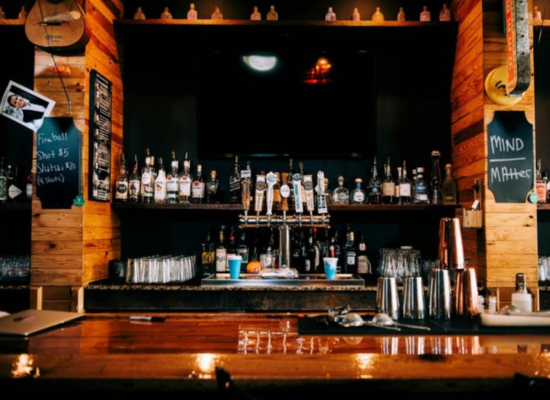
Learn more on building stronger operating systems: Everything You Need to Know About Bar Operations offers additional guidance on sales, inventory, technology, equipment, menu development, marketing, and staff education.
The menu must express the concept while remaining executable at peak volume.
For each drink, calculate:
- Exact recipe and serving size
- Ingredient cost
- Garnish and consumable cost
- Preparation time
- Glassware requirement
- Expected waste or spoilage
- Selling price and gross profit
- Required equipment and storage
- Whether ingredients can be used elsewhere
Avoid an opening menu that is too large. Complexity increases inventory, preparation, training, waste, and service times. A focused menu with clear reasons to order each item is easier to sell consistently.
Build a balanced offer across price points and drinking occasions. Include credible non-alcoholic options rather than treating them as an afterthought. If food is offered, align kitchen capacity with the promise. A small kitchen cannot reliably deliver an oversized menu during a busy service.
Use recipe cards and photographs to standardize every serve. Define approved substitutions and manager-authorized complimentary items. Standardization protects quality and cost.
Meet multiple state-authorized distributors and understand the applicable distribution and credit rules. Compare more than bottle price. Consider availability, delivery schedule, minimum order, legally permitted credit terms, support, staff education, portfolio fit, returns, and the supplier’s ability to maintain supply. Verify invoices at delivery and retain alcohol-purchase records for the period required by your regulator.
Create an approved product list and a purchasing authority matrix. Decide who may order, approve new products, accept deliveries, and authorize emergency purchases.
Do not allow free equipment, promotional support, or personal relationships to determine the entire menu. Supplier partnerships can be valuable, but the offer must first serve the guest and the business model.
Choose systems early enough to configure and test them before opening. You may need:
- Point-of-sale and payment processing
- Inventory and purchasing management
- Reservations, waitlist and table management
- Accounting and payroll
- Staff scheduling and timekeeping
- Tip or service-charge distribution
- Recipe and training documentation
- Customer relationship and email marketing tools
- CCTV, alarms and access control
- Music and entertainment systems
- Food-safety, cleaning and maintenance logs
Set up the chart of accounts so management can see beverage sales, food sales, discounts, comps, cost of goods, payroll, and controllable expenses separately. Weekly information is more useful than discovering a problem at the end of the month.
Configure the POS for the correct combination of state and local sales, meals, liquor, or hospitality taxes. Decide how tips, mandatory service charges and automatic gratuities will be described and processed; they may be treated differently for tax and wage purposes. Have the CPA and employment counsel approve the setup before opening.
Establish controls for cash, refunds, voids, discounts, complimentary items, staff drinks, breakages, transfers, delivery discrepancies and stock adjustments. Trust staff, but design a system that does not depend entirely on trust.
Hire the general manager, bar manager, and chef or kitchen leader—where relevant—before recruiting the full hourly team. These leaders should help finalize systems, menus, suppliers, hiring, and training.
Define each role clearly. A strong bartender is not automatically a strong bar manager; management requires scheduling, coaching, purchasing, cost control, compliance, and conflict resolution.
When hiring, assess:
- Hospitality and communication
- Reliability and judgement
- Relevant technical skill
- Ability to work at the expected volume
- Team behaviour
- Responsible alcohol-service awareness
- Willingness to follow standards
Build the staffing plan from forecast demand by hour, not from a fixed number of people per day. Include opening preparation, closing, cleaning, training, management and administrative time in the labour budget.
U.S. bar owners must check federal, state, and local rules governing minimum wage, tipped employees, tip credits, tip pools, overtime, breaks, predictive scheduling, paid leave, age restrictions, anti-harassment training, and required workplace notices. Do not copy another venue’s tip-pool arrangement. Managers’ participation, back-of-house inclusion, service charges, and credit-card deductions can be regulated differently. Use a payroll provider and employment adviser familiar with restaurants and bars in the relevant state.
A general business policy alone may not adequately cover a bar. Work with a broker experienced in hospitality and discuss:
- General liability
- Liquor liability or dram-shop exposure
- Property and equipment coverage
- Business interruption
- Workers’ compensation
- Employment practices liability
- Cyber and payment-data risks
- Crime, employee theft and cash loss
- Hired and non-owned auto exposure
- Assault-and-battery exclusions or coverage
- Live entertainment, security, dancing and special events
Coverage requirements and exclusions deserve as much attention as the premium. Make sure the insurer understands the real operating model, including entertainment, hours, security, capacity, patio, delivery, and any high-risk activities.
Document how the business runs before opening. The manual should cover:
- Brand standards and service sequence
- Opening and closing checklists
- Recipes and preparation
- Responsible alcohol service and age verification
- Acceptable forms of ID, fake-ID escalation and underage-entry rules
- Intoxicated or disruptive customers
- Security and incident reporting
- Cash and payment handling
- Stock receiving, storage and counts
- Cleaning, hygiene and food safety
- Allergens and dietary communication
- Fire, accident and emergency procedures
- Harassment, discrimination and workplace conduct
- Complaints, refunds and service recovery
- Social media and media policies
- Equipment care and maintenance
- Key-holder and access procedures
The manual should be usable during a shift, not written only for compliance. Pair policies with short checklists and forms.
Pre-opening training should combine classroom learning with practical rehearsal. Cover the concept, menu, recipes, product knowledge, hospitality standards, POS use, responsible service, cleaning, safety, emergency procedures, and complaint handling.
Run role-play exercises for difficult situations: refusing service, checking identification, dealing with an incorrect drink, managing an allergy question, handling harassment, responding to a payment dispute, and escalating a safety concern.
Conduct timed station drills and full mock services. Measure ticket times, identify missing equipment, test the communication between bar, floor and kitchen, and adjust staffing before paying guests expose the problems.
Marketing should begin well before the first night. Create a simple, accurate website and establish the venue’s profiles on the platforms guests use to discover bars in your market. Ensure the address, map, hours, booking information, menu, and opening status are consistent.
Develop a launch plan that may include:
- A behind-the-scenes opening story
- Founder and team introductions
- Menu previews
- Neighbour and local-business outreach
- Partnerships with hotels, offices, concierges and event venues
- A local media and creator list
- Email and SMS sign-ups
- Preview services for trade, community and media contacts
- A reservation or waitlist strategy
Avoid building attention around an opening date that construction or licensing has not made secure. Communicate a general period first, then announce the exact date when approvals and operational readiness are sufficiently certain.
A soft opening is a controlled operational test, not merely a party for friends. Limit capacity, simplify the menu if necessary and invite different guest groups across several services.
Test:
- Arrival, greeting and seating
- Ordering and payment
- Drink and food ticket times
- Station setup and restocking
- Product quality and consistency
- Sound, lighting, and temperature
- Restrooms and cleaning
- Security and closing procedures
- Guest feedback and complaint recovery
Hold a structured review after every service. Assign each issue to an owner and deadline. Fix recurring operational problems before increasing capacity.
Do not maximize bookings on the first public weekend. A packed room may look successful, but poor service can damage the venue’s reputation before the team has developed rhythm.
Have senior leaders present and give one person authority to make real-time decisions. Maintain backup stock, technical support contacts, emergency procedures and a clear escalation path.
Track a short opening dashboard every day:
- Net sales
- Guest count
- Average spend
- Sales mix
- Labour hours and labour cost
- Discounts, voids and complimentary items
- Product shortages
- Ticket times
- Customer complaints and positive feedback
- Safety or security incidents
The opening is the beginning of the learning period, not the end of the project.
Daily
Review sales, labour, cash, incidents, shortages, customer feedback, and equipment issues. Hold a short pre-shift briefing and post-shift manager handover.
Weekly
Review the profit-and-loss flash report, inventory variance, purchasing, menu sales, labour scheduling, reservations, reviews and marketing results. Count high-value inventory consistently. Meet with department leaders and agree on actions.
Monthly
Close the accounts promptly. Compare actual performance with the conservative, base, and strong plans. Review cash runway, supplier terms, staffing levels, menu profitability, and upcoming local events or seasonal changes.
Use data to improve the business, but do not change the concept every week. Separate a genuine structural problem from normal opening inconsistency.
Many tasks overlap, but the dependencies should remain clear:
1. Define the concept and target customer.
2. Research the market and test the idea.
3. Build the financial model and capital budget.
4. Assemble the core professional and operating team.
5. Study licensing and property requirements.
6. Find sites and conduct due diligence.
7. Negotiate a protected lease or acquisition.
8. Complete design, permits, and detailed budgets.
9. Secure funding and begin construction.
10. Build menus, supplier agreements, and operating systems.
11. Recruit leaders, then the wider team.
12. Write procedures and complete training.
13. Begin measured pre-opening marketing.
14. Run mock services and soft openings.
15. Open with controlled capacity.
16. Optimize the business through disciplined daily and weekly review.
Use these national resources as starting points, then follow them to the appropriate state and local authorities:
- The U.S. Small Business Administration launch guide covers entity selection, registration, tax IDs, licenses, bank accounts, and insurance. The SBA specifically notes that location determines the taxes, zoning laws, and regulations that apply.
- Apply for an EIN directly through the IRS. The IRS does not charge for an EIN.
- Use the TTB directory of state alcohol control boards to identify the relevant state regulator, then verify the retailer rules on that regulator’s own website.
- Review the Department of Justice’s ADA guidance for businesses open to the public.
- Check the U.S. Department of Labor and the relevant state labour department for wage-and-hour rules.
- Use OSHA’s restaurant safety resources as a starting point for workplace hazards and training.
Government webpages are useful starting points, but they do not replace address-specific advice from the city, alcohol authority, architect, lawyer, CPA and insurance broker.
Falling in love with a property
A dramatic room or attractive address does not compensate for impossible licensing, weak customer traffic, inadequate utilities, or unsustainable rent.
Spending too much on visible design
Guests notice the room, but the business also needs storage, drainage, refrigeration, soundproofing, ventilation, equipment, working capital, and trained staff.
Underestimating the time before opening
Permits, construction, equipment lead times, inspections, and hiring can take longer than expected. Every extra month can add rent, finance costs, and payroll without sales.
Opening without enough working capital
Revenue rarely becomes stable immediately. Preserve cash for the period after opening, not only for construction.
Creating an oversized menu
More products can mean more waste, slower service, harder training, and cash tied up in inventory. Start focused and expand based on demand.
Hiring operational leadership too late
Managers should shape the systems they will be expected to run. Bringing them in just before opening creates preventable problems.
Confusing popularity with profitability
A full bar can still lose money if drinks are underpriced, labour is uncontrolled, product disappears, or occupancy costs are too high.
Managing by monthly bank balance
Cash in the account does not show unpaid bills, tax obligations, inventory losses, or future payroll. Use timely financial reports and forecasts.
Before admitting paying guests, confirm that:
- All required licences, permits and inspections are complete.
- Insurance is active and appropriate for the venue’s activities.
- Equipment has been installed, tested and serviced.
- Fire, security, first-aid and emergency procedures are operational.
- Suppliers, delivery windows and backup products are confirmed.
- Recipes, prices and POS buttons match.
- Staff contracts, payroll, scheduling and required training are complete.
- Opening and closing checklists have been tested.
- Cash, refunds, voids, comps and inventory controls are active.
- Cleaning, waste, pest-control and maintenance programs are scheduled.
- The website, maps, menus, bookings and published hours are accurate.
- Managers know who has authority during incidents.
- The business has sufficient remaining working capital.
Your outsider perspective can be an advantage. You may recognize unmet customer needs, bring stronger financial discipline or build a concept that an industry insider would not imagine. But hospitality punishes assumptions quickly. Respect the operational craft, hire experienced people early, and make major commitments only after the relevant commercial, legal, and technical questions have been answered.
The strongest bar is not simply the one with the most original drinks or impressive interior. It is the one in which the concept, location, licence, layout, menu, team, pricing, and financial model reinforce one another. Build those foundations in the correct order, and opening night becomes a milestone in a sustainable business—not the end of the budget.
Also Read:
Bar Operations Insights from Danny Shapiro: Service, Sales and Smarter Menus
Future-Proof Your Bar: Embracing the Latest Trends in Design and Sustainability