Educating Bartenders Worldwide.
By Beverage Trade Network
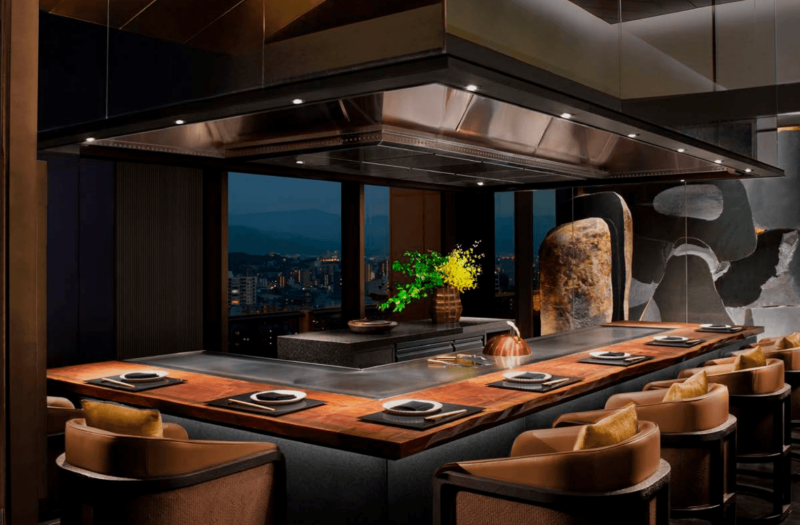
Marriott International’s Future of Food 2027 report identifies a growing emphasis on local identity across Asia Pacific hospitality, as restaurants and bars adapt their menus, spaces and service to changing guest expectations.
Titled The Rise of Place, the report examines Asia Pacific excluding China. Its research includes a survey of food and beverage teams at 284 Marriott properties across 20 markets, completed in July 2026, alongside interviews with chefs, hospitality executives, designers and other industry figures.
The findings describe a dining landscape increasingly shaped by destination-specific ingredients and experiences, smaller restaurant concepts and more flexible ways to eat and drink. For sommeliers and beverage managers, the report also highlights growing interest in locally produced drinks and sophisticated alternatives to alcohol.
Authentic local signature dishes were identified as the biggest trend in their market by 95% of surveyed properties. Meanwhile, 79% reported introducing new local ingredients into menus.
The report’s local-signatures data panel also shows that 68% of respondents reported local ingredients appearing more frequently in beverage menus. This suggests that destination-led dining increasingly extends beyond the kitchen to cocktails, wine lists and other drinks.
At Crony in Tokyo, for example, Japanese wines account for 12% of the wine list, reflecting the restaurant’s approach to sourcing food.
Among the regional beverage categories included in the survey, local craft gin recorded the highest proportion of respondents reporting increased demand, at 35%. Local wine and local whisky each registered 24%, followed by local craft rum at 23%, sake at 17% and soju at 15%.
These figures describe reported changes in demand within the surveyed operations; they are not market-share figures or percentage sales growth rates.
The report finds that 42% of surveyed restaurants and bars reported higher sales of non-alcoholic beverages, while 22% reported higher sales of low-alcohol drinks. It also records 56% introducing a dedicated alcohol-free cocktail list.
Contributors describe guests seeking alcohol alternatives with the same attention to ingredients, presentation and menu placement as alcoholic drinks.
Garry Berryman, Head of Global Accounts at Pernod Ricard, observes that guests may switch between alcoholic and alcohol-free drinks during the same hotel stay, depending on the occasion. The report therefore presents moderation as an increasingly flexible drinking behaviour.
For fine dining, alcohol-free pairings are becoming more ambitious. Kazutaka Ozawa, co-owner of Crony and winner of Asia’s Best Sommelier Award 2025, highlights premium tea as a pairing option with a broad range of aromas and flavours. He also points to drinks fermented in a similar way to wine before being dealcoholised, offering drier profiles suited to food.
The report identifies umami-led cocktails and mocktails using ingredients such as tomato, mushroom and soy, alongside a developing range of non-alcoholic spirits.
Marriott’s research records 45% of surveyed properties reporting increased guest preference for casual spaces, such as lounge seating. Increased preference for intimate and quiet dining spaces stood at 44%, while private dining rooms registered 43%.
Petr Raba, Marriott International’s Vice President of Food & Beverage for Asia Pacific excluding China, identifies 40–60 seats as an emerging format for smaller restaurants with a clear identity.
His approach includes creating specialised concepts within larger venues. A room used for breakfast, for example, can become a smaller, more focused restaurant at lunch or dinner.
Design contributors describe lighting, acoustics and flexible furniture as tools that help venues change atmosphere throughout the day. Counter seating, bars and open kitchens also provide opportunities for solo diners to feel connected to the experience.
The report discusses smaller wine pours and flexible tasting menus as ways to let individual guests explore more of a restaurant’s offering.
Under its “99 Minute Fine Dining” theme, Marriott describes a move toward shorter experiences built around a limited number of memorable courses.
Across surveyed properties, 58% reported average fine dining meals lasting 1.5–2 hours. Singapore stood at the faster end, with 85% reporting an average of 1.5 hours. Japan showed a different pattern: 57% reported meals lasting 2–2.5 hours.
Restaurants are adjusting their formats in several ways. Regionally, 26% reported introducing a lunchtime offer, 24% an à la carte menu and 11% reducing the number of courses in their set menu.
For sommeliers, the shorter-meal trend raises a practical consideration: pairing programmes and tableside explanations may need to deliver their impact within a tighter service window. That is an operational implication of the findings, rather than a measured survey result.
The report finds that 97% of surveyed properties serve dishes featuring ingredients associated with wellness and longevity. Common ingredients include turmeric and ginger, black sesame, matcha, and miso.
Respondents also reported growing demand for healthier food and sugar-free options. In India, 78% reported increased demand for healthy food and 83% for less sugar in dishes.
Marriott plans to integrate its APEC Plant-Forward Program into regional dining standards in the first quarter of 2027. A pilot across five properties developed a 10-dish vegan menu framework with localised recipes, operating procedures and allergen guidelines.
Wellness is also influencing in-room hospitality: 17% reported adding healthier minibar options, while 15% replaced sweet turndown treats with healthier alternatives.
AI is already being used for several operational and creative tasks. The report lists activation inspiration at 63%, marketing campaigns and materials at 61%, menu development at 54%, concept creation at 52% and tracking guest behaviour at 34%.
Its contributors emphasise that technology should support staff and preserve personal interaction.
For beverage teams, the broader message is a growing opportunity to connect drinks more closely with the destination, offer credible alcohol-free choices and adapt service to different occasions. The report’s evidence comes from Marriott’s surveyed operations and expert contributions, providing a hospitality perspective rather than a comprehensive measure of the region’s restaurant and beverage markets.
Source: Marriott International, Future of Food Asia Pacific 2027: The Rise of Place.
Also Read:
The Fall Menu Reset: Are You Building Cocktails for Your Guests—or for Other Bartenders?
Bar Operations Insights from Danny Shapiro: Service, Sales and Smarter Menus